How Much Does a Sewing Machine Cost?
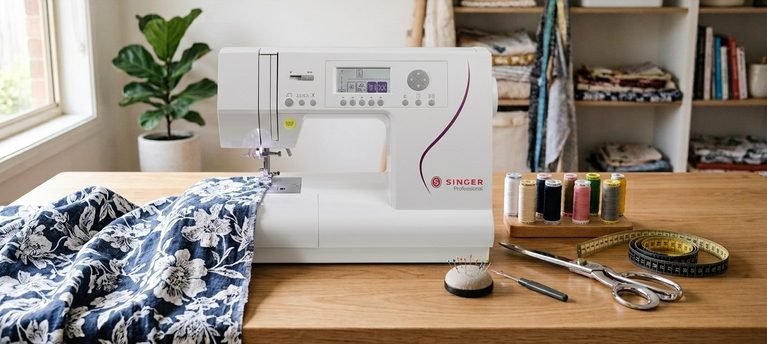
In Australia, sewing machines typically cost $100 to $5,000+, depending on the type. Beginners can get a decent entry-level mechanical machine for $100–$300, while computerised mid-range machines sit around $300–$800.
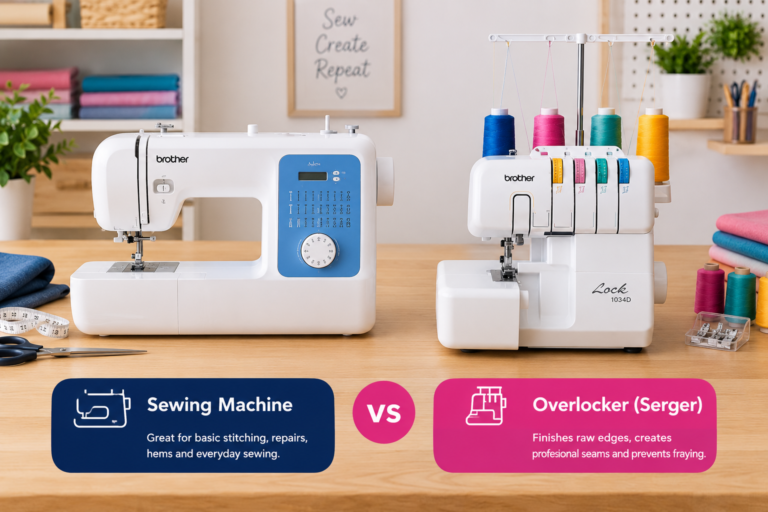
Overlockers cost $250–$1,000+, embroidery and quilting machines run $400–$2,000+, and industrial or professional-grade machines can exceed $5,000. For a first machine, budgeting $150–$350 gets you something reliable without overpaying for features you won’t use yet.
Affiliate Disclosure: This post contains affiliate links. If you buy through them, HomeNoche may earn a small commission at no extra cost to you. Full details on our Affiliate Disclosure page.
What Affects the Price of a Sewing Machine in Australia
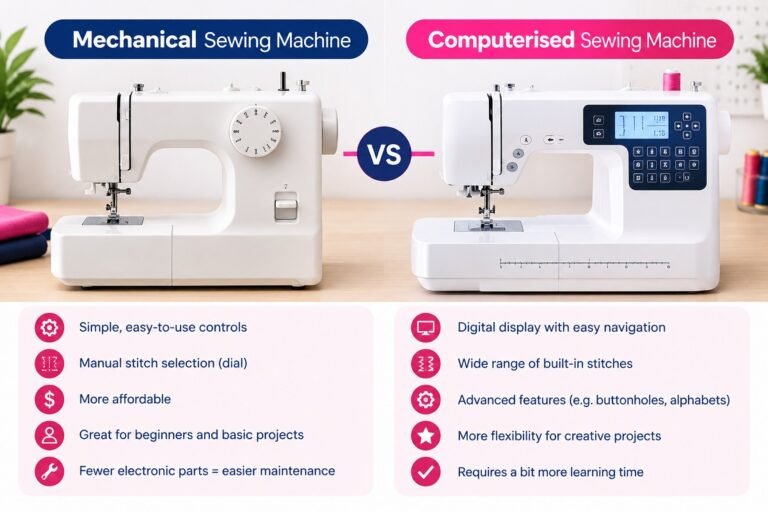
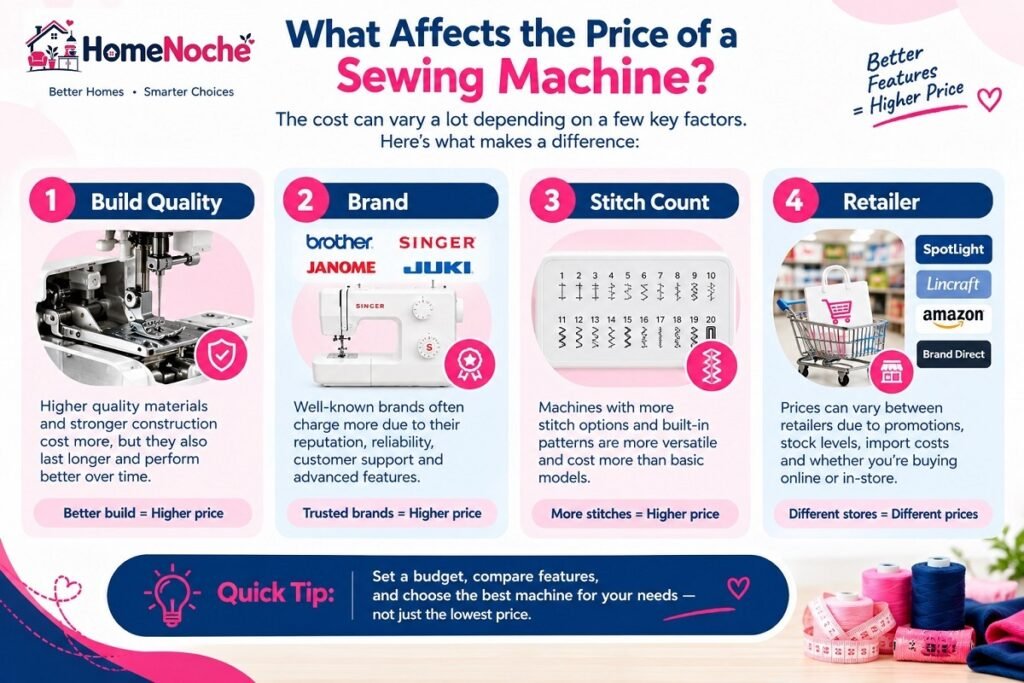
The biggest price drivers are whether a machine is mechanical or computerised, how it’s built, and which brand makes it. Mechanical machines use dials and manual settings, which keeps costs down and makes them easier to repair.
Computerised machines add digital screens, automatic threading, and dozens (sometimes hundreds) of built-in stitches, which pushes the price up.
A few other factors that move the price:
- Build quality metal internal frames and components last longer and cost more than plastic-heavy budget models.
- Brand and local support brands like Brother, Singer, Janome, and Bernina price partly based on their Australian service network and warranty backing, not just the machine itself.
- Stitch count and features automatic buttonholes, needle threaders, extension tables, and speed control all add to the price.
- Where you buy it big retailers like Spotlight and Lincraft run frequent sales, while specialist brand stores (like a Janome or Brother dealer) may sit closer to RRP but include setup and servicing support.
- New vs secondhand a good secondhand Singer or Janome can be a smart way to get metal-body durability for well under $150, if you can inspect it first.
Sewing Machine Prices by Type
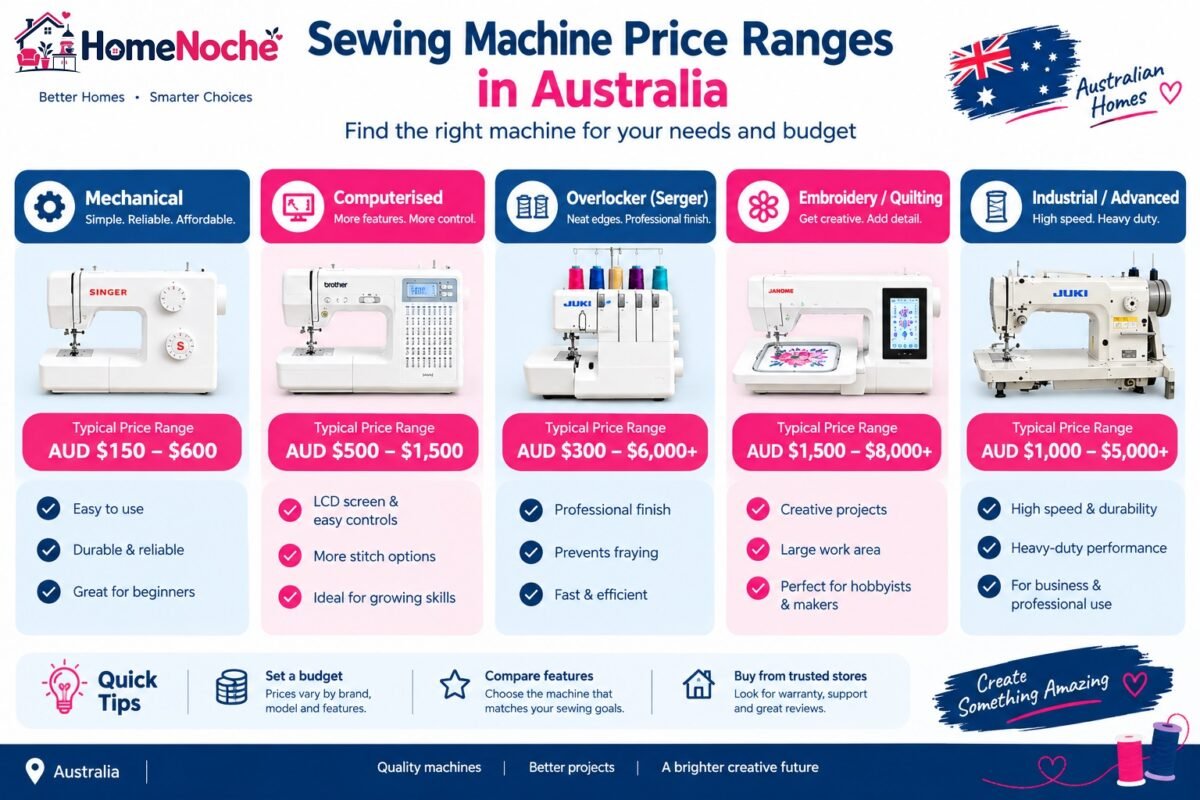
Machine Type | Typical AUD Price Range | Best For |
|---|---|---|
Entry-level mechanical | $150 – $500 | Absolute beginners, basic mending and repairs |
Computerised / mid-range | $500 – $1500 | Hobbyist garment sewing, more stitch variety |
Overlocker (serger) | $300 – $6,000+ | Professional-looking seam finishes, knitwear |
Embroidery / quilting | $1500 – $8,000+ | Decorative stitching, quilting projects |
Industrial / advanced | $1000 – $5,000+ | High-volume or professional production use |
Entry-Level Mechanical Machines
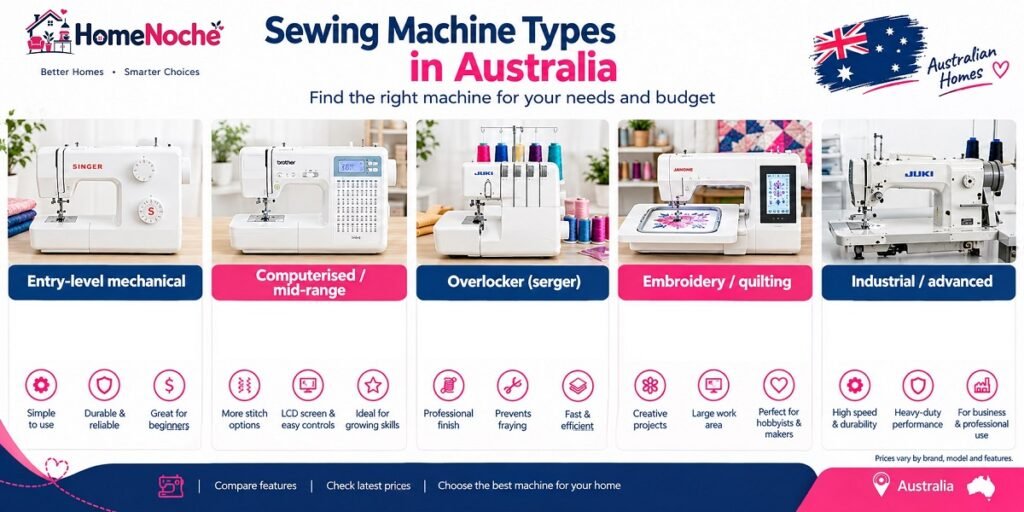
These are the most affordable option and a sensible starting point if you’ve never sewn before. Expect a basic straight and zigzag stitch, one buttonhole setting, and manual dial controls. They’re simple to learn on and cheap to repair if something goes wrong. The trade-off is fewer stitch options and, on the cheapest models, more plastic components that wear faster with heavy use.
Computerised / Mid-Range Machines
Once you move into computerised territory, you typically get an LCD screen, automatic needle threading, a wider stitch library, and steadier stitch quality at speed. This is the range most hobbyist sewists eventually land in, since it balances useful features against price without tipping into professional-grade territory.
Overlockers / Sergers
An overlocker isn’t a replacement for a standard sewing machine; it trims, stitches, and finishes seams in one pass, which is what gives garments that professional, non-fraying edge. If you sew a lot of knitwear or activewear, this is usually the second machine people buy after their standard sewing machine.
Embroidery and Quilting Machines
Embroidery machines add digital design capability, embroidery hoops, and (on higher-end models) USB or wireless pattern transfer. Quilting machines instead focus on a wider throat space and extension table compatibility, so you can manage large, layered fabric more easily. Both categories can climb well past $2,000 for advanced home models.
Industrial and Advanced Machines
These are single-purpose, high-speed machines built for continuous professional use, think alterations businesses or small production runs. Premium Swiss and Japanese brands (Bernina, high-end Baby Lock and Pfaff) also sit in this range for home sewists who want machine-for-life durability and precision, even without industrial-scale output.
Cost of Ownership Beyond the Machine
The sticker price is only part of the budget. Ongoing costs typically include:
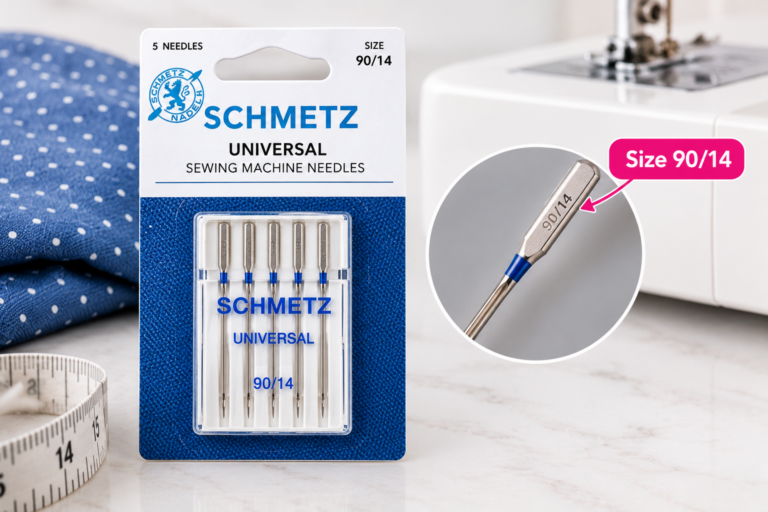
- Needles and bobbins are cheap, but need regular replacing (especially needles, which dull faster than most beginners expect).
- Thread quality thread affects stitch consistency more than most new sewists realise.
- Servicing an annual service (roughly $60–$120) keeps tension and timing accurate, especially for overlockers, which need more frequent cleaning due to the cutting blade.
- Extras: a sewing table, extension table, or storage case can add $50–$300 depending on what you choose.
- Presser feet specialty feet (zipper, buttonhole, walking foot) are usually sold separately and range from $10–$40 each.
Budgeting an extra 10–15% on top of the machine price for accessories and first-service costs is a reasonable rule of thumb.
How Much Should a Beginner Actually Spend?
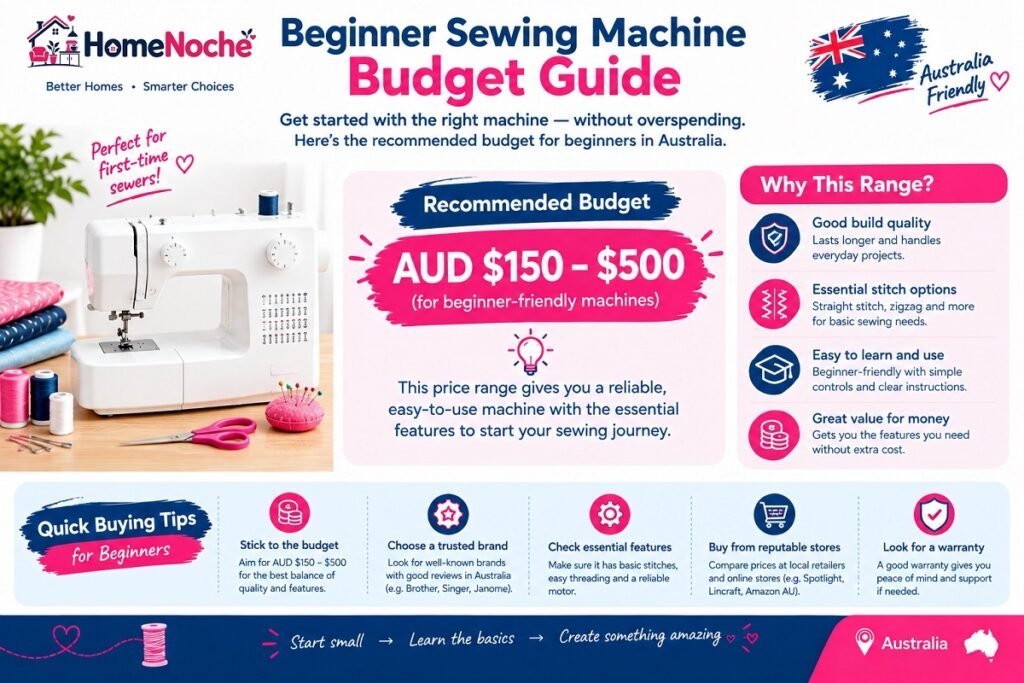
For a first machine, $150–$350 is the sweet spot for most complete beginners in Australia. This range gets you a mechanical or entry-level computerised machine with enough stitch variety to handle clothing repairs, simple garments, and craft projects, without paying for embroidery modules or industrial-grade features you’re unlikely to use while still learning. If you’re not sure sewing will stick, buying secondhand at the lower end of this range or borrowing a machine first is a low-risk way to test the hobby before committing more.
Key Takeaways
- Entry-level mechanical machines: $150–$500 best for beginners
- Computerised/mid-range machines: $500–$1500 best for hobbyists
- Overlockers: $300–$6,000+ for professional seam finishing
- Embroidery/quilting machines: $1500–$8,000+ for decorative and quilting work
- Industrial/advanced machines: $1000–$5,000+ for heavy or professional use
- Budget an extra 10–15% for needles, thread, servicing, and accessories
Frequently Asked Questions
About Author

Muhammad Irfan Malhi is Content Researcher at HomeNoche. He researches and writes buying guides for home, kitchen and craft products, drawing on manufacturer specifications, retailer data, and Australian consumer sources to help readers make informed decisions. This guide is based on independent research rather than in-house product testing.